Navigating the Therapeutic Advertising Guidelines: Keep Your Content Engaging and Compliant for Cosmetic Medicine Pros
This month brings some big updates (and maybe a few minor headaches) for the cosmetic medicine industry. New and stricter rules have been rolled out around the guidelines of Therapeutic Advertising. If you’re feeling a bit wobbly about what to post on Instagram, then you’re in the right place. I'm here to help you keep your content fab and compliant.
The latest rules for advertising cosmetic medicine cover everything online, like websites and social media posts. They’re all about keeping things honest and top-notch for consumers. Let’s break it down!
The Rules (and Why You Should Care)
1. Before & After Photos
Got those amazing transformation pics? Here’s what you need to do:
Written consent from your patient is a must.
Keep it Real, no filters or Photoshop allowed.
Framing, camera position, lighting and background must be consistent for both before and after images
Make sure your patients can’t be identified (crop those pics so eyes and bridge of nose aren’t showing or use thick bands to cover eyes and noses).
Why? To ensure that patient privacy is respected and that photos accurately represent results without enhancements.
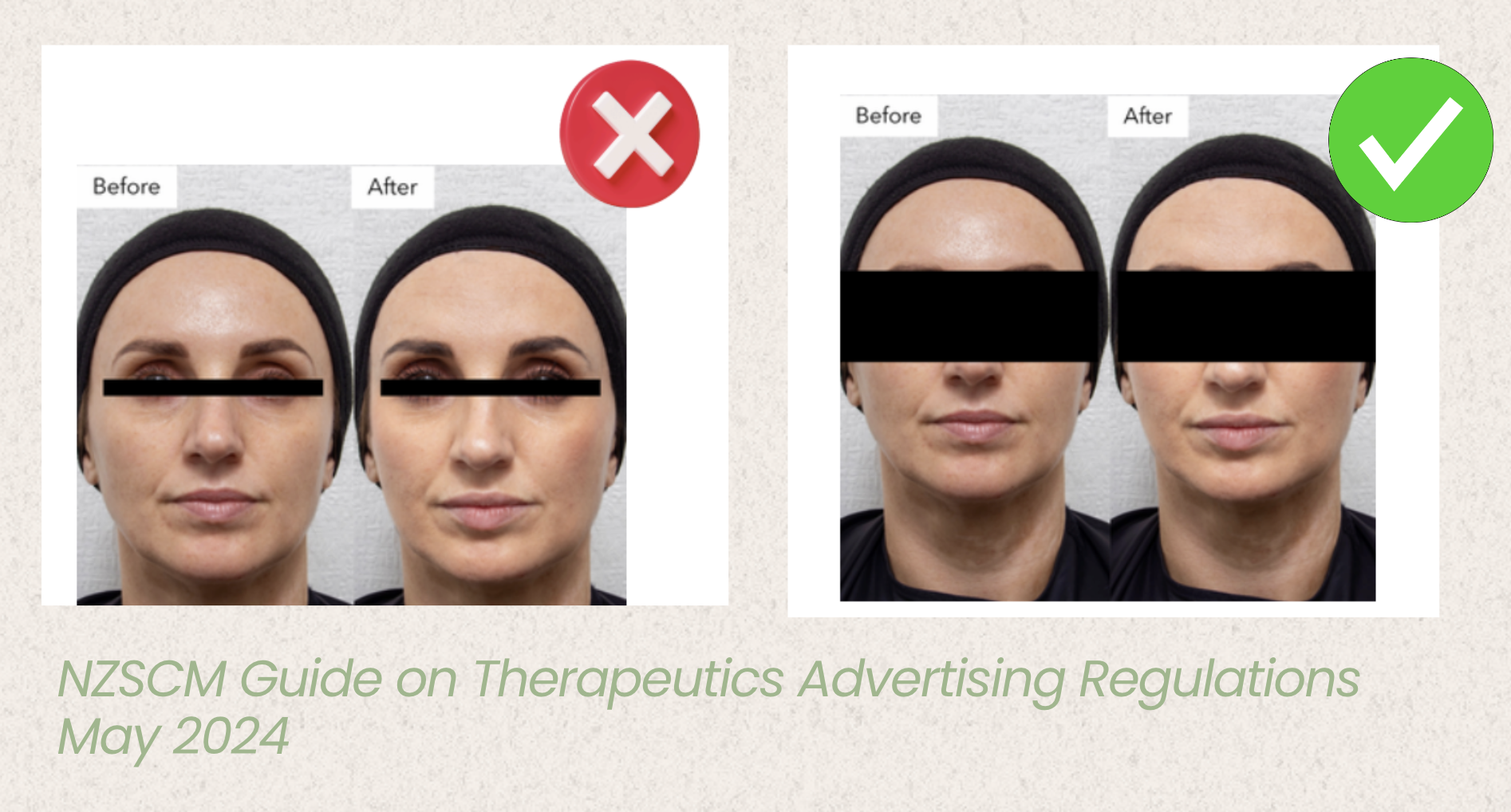
2. No Giveaways or Discounts
Planning a promo? Skip the giveaways and discounts if they involve prescription meds or medical devices. Why? To avoid incentivising the use of regulated medical treatments in a way that might be considered misleading or unethical.
3. See ya later Testimonials
No more sharing testimonials about medical treatments like injectables. This includes both written and visual feedback. This is to prevent unverified claims that could mislead potential clients about the effectiveness and safety of treatments. Make sure your patients aren’t posting pics or videos of you treating them.
4. Influencer Restrictions
Influencers can no longer promote injectables or medical devices. Stick to skincare and beauty tips instead! This is to ensure that promotional content remains compliant with medical advertising regulations and doesn’t mislead the audience.
5. Professional Endorsement
While it might be tempting to get some great shots of you treating a patient, this counts as a professional endorsement and isn't allowed. You can't feature any identifiable staff members receiving or demonstrating any injectable cosmetic treatments or medical devices.
Staying Compliant: Your Checklist
Always use the correct names for medications and devices.
Stick to the script and make sure your services match the registered and approved uses of the medications.
You must disable Facebook reviews and avoid Google reviews where possible.
Patient feedback comments should focus on how lovely your team is, non-medical treatments and skincare.
As the practitioner, you must not be identifiable performing a treatment or endorsing a prescription medication.
Make sure your patient is unidentifiable in all content.
Get your ads approved by TAPS to ensure you are staying compliant.
Include mandatory statements when you talk about any prescription meds or medical devices.
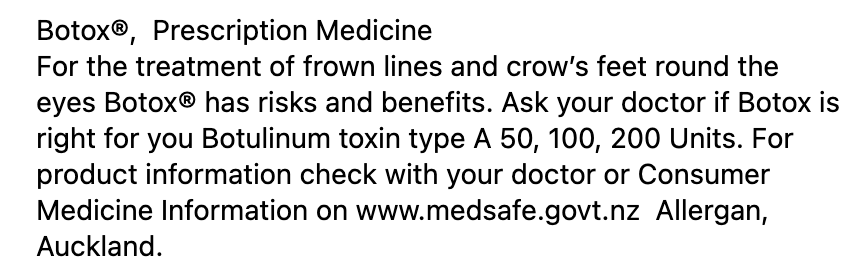
Example of what a mandatory statement looks like. These must be included in every post that mentions a prescription medicine. It must be in the caption or post, NOT in the comments.
Keeping Your Social Media Buzzing
Just because the rules are tighter doesn’t mean your social media has to be boring! Here are some fun and compliant ways to keep your content lively:
Keep the clinic vibes high! Share behind-the-scenes snaps and show off your fabulous team. Highlight fun team activities, celebrations, or a day in the life at your clinic.
Get your storytelling hat on! Use infographics to make treatments easy to understand. Break down treatments into easy-to-digest graphics or Reels, that explain the process and what the outcome may be (with the mandatory statements, of course).
Highlight patient stories without using identifiable images. Talk about success stories to showcase positive outcomes while respecting privacy. You can do this by talking to stories or reels.
Provide tips on skincare and overall wellness that do not directly promote specific treatments.
Use Reels to demonstrate your client’s most common pain point - such as the effects of ageing, and how certain products or treatments can support them with this by reducing the visibility of wrinkles. Take them through the customer journey featuring an Anti-Wrinkle product. Remember to add the mandatory statement to your caption and make sure the filmed patient and the practitioner is unidentifiable.
Show your success by prioritising those before and after shots - just make sure your patient has provided written consent and is not identifiable! You can also show the treatment's success by strategically filming the treatment area without identifying the patient, and piece together in a short & snappy Reel.
Get the live engagement and interaction going. Host Q&A sessions to engage directly with your followers. Schedule regular live sessions where you answer common questions and discuss the latest treatments in cosmetic medicine (but be mindful of the mandatory statements, the correct terminology and the registered uses of the products).
Flaunt your team’s skills and dedication to patient care. Post about your team's qualifications, training, and the extra steps you take to ensure patient safety and satisfaction. But make sure you don’t include any identifiable content of you performing the service.
Jump on fun trends with your team! Creating light-hearted and entertaining content allows your audience to get to know you better, get a feel for the clinic before booking an appointment, and increase your reach on Instagram!
Thriving Within the Guidelines
Sticking to these new rules doesn’t mean your content has to be boring. With a dash of creativity and planning, you can keep your audience engaged and your posts compliant.
I’m Simonne, your go-to Social Media Strategist for the wellness and beauty industry. Let’s chat about how to make your content engaging yet compliant over a Clarity Call!
Disclaimer: Information gathered for this blog is from the Therapeutic Advertising Regulation guide from the NZSCM